Commercial sewer repair
Repair damaged commercial sewer and drain systems with Repiper’s trenchless relining method, designed to reduce excavation, disruption and restoration work.


Repair damaged commercial sewer and drain systems with Repiper’s trenchless relining method, designed to reduce excavation, disruption and restoration work.
OVERVIEW
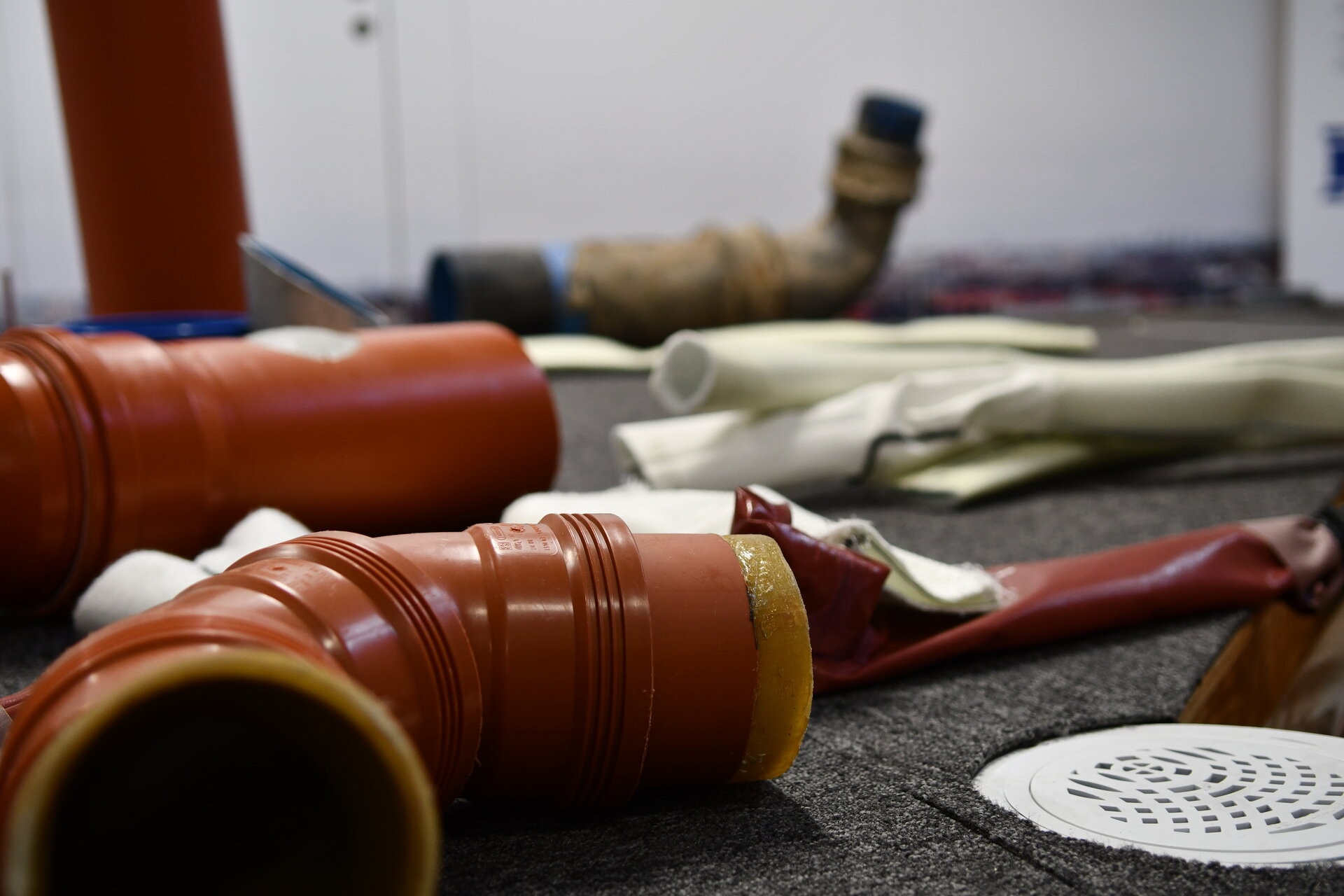
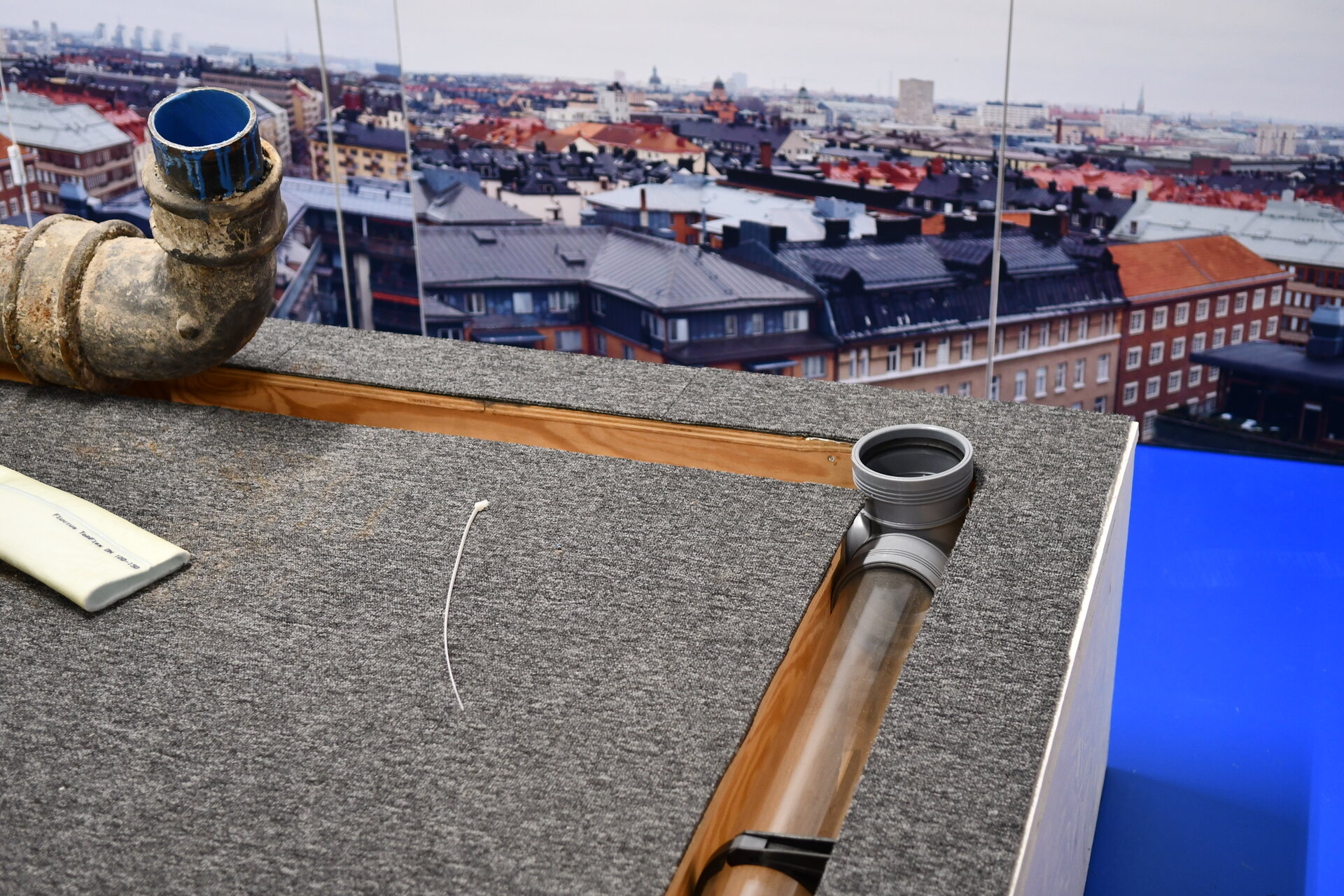
Trenchless commercial sewer repair is a non-invasive (“no-dig”) method to restore damaged main, lateral, and vertical sewer and drain pipes. It involves relining leaking pipe systems with tight-fitting, jointless, and corrosion-resistant replacement pipes made out of cured epoxy. It essentially builds a new pipe within the existing one.
Trenchless commercial sewer repair is used synonymously with pipe relining, CIPP sewer lining, and epoxy pipe lining, among others, within the industry.
COMPARISON
Repiping includes opening up walls or floors to remove the pipes and replace them with new ones. It is an invasive process that is slowly but surely being phased out and replaced by relining – and with good reason. Traditional repiping involves acute inconvenience for the building owners where they must either be evacuated or have to deal with noise and dust while the restoration of the pipes is in progress.
Not to mention, trenchless commercial sewer repair is more cost- and time-effective than traditional repiping. The total cost of removing the old pipes and installing new ones and the remediation (repairing and repainting walls, floors, and structures) is often significantly higher than the total cost of relining. While it ultimately depends on the extent of the job and the amount of demolition required, repiping is also a time-consuming process that can take weeks to complete. In contrast, relining can take a few hours up to a few days to complete.
HOW IT WORKS
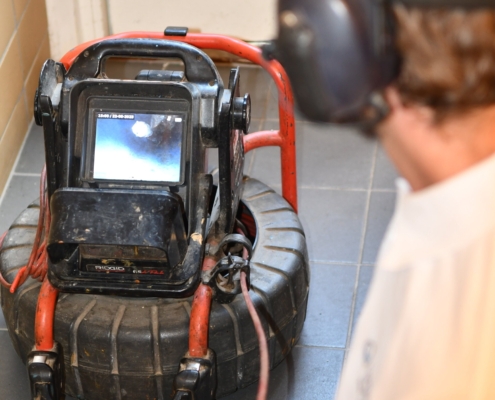
Commercial sewer repair and commercial drain repair projects begin with a detailed inspection of the existing pipe system. Repiper’s StepbyStep method then follows a controlled process from cleaning and liner preparation to installation, curing and final inspection.
METHOD
When using our patented tools and the StepbyStep method, neither floors nor walls have to be broken up – regardless if it’s a residential, industrial, or commercial sewer repair – which minimizes the disturbance. The entire process only takes a few hours up to a few days (depending on the project size) and is carried out at a fraction of the price compared to traditional methods. Read more about the Repiper method.
ADVANTAGES
The Repiper StepbyStep method for sewer repair offers a host of advantages to benefiting the building owners and the relining company:
OUR OFFERINGS
Through innovative trenchless commercial drain repair solutions, increased dissemination of knowledge, and with long experience within the industry, Repiper contributes to the sustainable pipe renovations of the future. Contact us for more
Repiper offers everything you need to ensure a high-quality relining repair. A complete product catalog of relining products and our own patented tools. The offering consists of Swedish-developed relining technologies adopted for the US market.
Repiper offers detailed on-site training and education about our method and products from our experienced staff. You will also get access to educational “how to” videos and material available on our website.
Receive support from one of our experienced staff members to plan and ensure the success of your relining projects. We guide and instruct you on how to use our products, tools, and StepByStep method.
What is commercial sewer repair?
Commercial sewer repair involves restoring damaged sewer pipes in offices, retail properties, industrial buildings, apartment complexes and other commercial facilities. Trenchless methods can repair suitable pipes internally without excavating the complete pipe route.
Can commercial drain repair be completed without excavation?
In many cases, commercial drain repair can be completed with limited excavation by installing a liner through existing or locally created access points. Some access work may still be required depending on the pipe configuration and condition.
What is commercial pipe relining?
Commercial pipe relining is a trenchless method that creates a new internal surface inside an existing sewer or drain pipe. A resin-saturated liner is installed and cured within the damaged pipe while retaining its original route.
When should a commercial sewer line be relined instead of replaced?
A sewer line may be suitable for relining when it has cracks, leaking joints, corrosion or deteriorated internal surfaces but retains sufficient structural stability. Collapsed or severely deformed pipes may require replacement.
How can sewer repairs affect business operations?
Excavation-based repairs can create noise, restricted access and disruption around a commercial property. Trenchless commercial sewer repair can reduce demolition and restoration requirements, helping limit interruption to normal operations.
How long does commercial sewer repair take?
The project duration depends on the pipe length, diameter, condition, access and curing method. Relining can often be completed faster than replacement because extensive excavation and reconstruction are reduced.